Swimming pools are a source of fun and relaxation—but if you have pets, they can also pose hidden dangers. Many pet owners assume that dogs instinctively know how to swim or that pools are harmless, but the reality is more complex.
If you’re a responsible pet owner, understanding pool safety for pets is crucial. This guide covers everything you need to know—from risks to prevention—so your furry friend can stay safe while still enjoying the water.
⚠️ Why Swimming Pools Can Be Dangerous for Pets
Even though many animals can swim, that doesn’t mean they’re safe in a pool environment.
🚨 Common Risks Include:
- Drowning risk (especially for small, elderly, or weak pets)
- Exhaustion from prolonged swimming
- Slippery pool edges making it hard to escape
- Chemical exposure (chlorine, pool cleaners)
- Panic and confusion in unfamiliar water
👉 Not all pets are natural swimmers. Breeds with short legs or flat faces (like Bulldogs or Pugs) struggle more in water.
🐶 Can All Pets Swim Safely?
Short answer: No.
While dogs like Labradors are known for swimming, others may:
- Sink quickly
- Panic in water
- Be unable to find an exit
Cats, on the other hand, generally avoid water but can accidentally fall in and struggle to get out.
🛑 Signs Your Pet Is in Danger in the Pool
Watch closely for these warning signs:
- Rapid paddling or splashing
- Head barely above water
- Trying to climb pool walls
- Whining or distressed sounds
- Sudden fatigue or slowing down
👉 If you notice any of these, act immediately.
✅ Essential Pool Safety Tips for Pet Owners


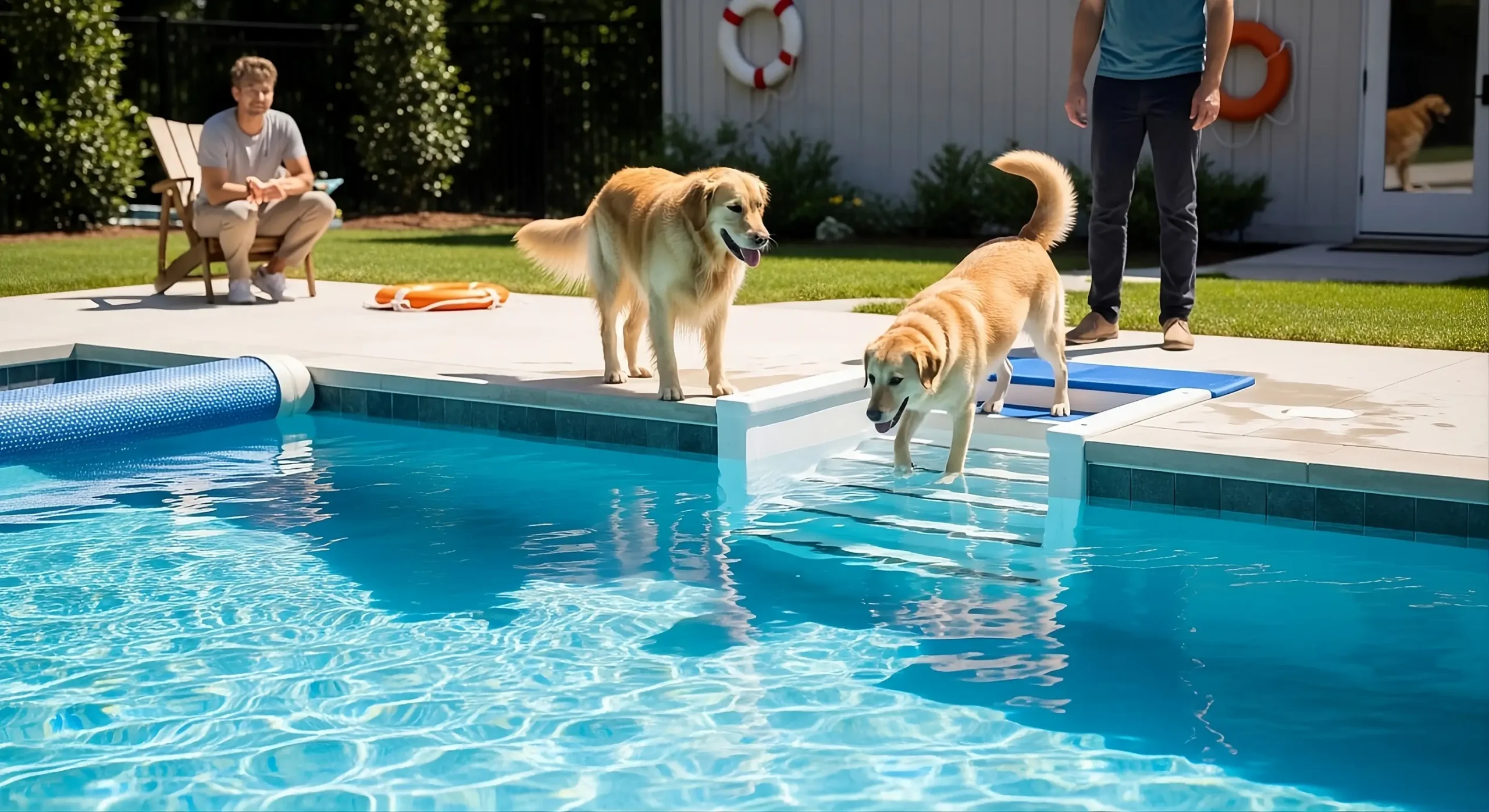
1. Install a Pet-Friendly Pool Exit
Make sure your pet can easily get out of the pool.
- Install ramps or wide steps
- Train your pet to locate the exit
- Practice entry and exit regularly
2. Never Leave Pets Unsupervised
Even strong swimmers can get into trouble.
✔ Always keep an eye on your pet
✔ Avoid distractions like phones
✔ Stay nearby when your pet is around water
3. Use a Pool Fence or Cover
Barriers can prevent accidents before they happen.
- Install a secure pool fence
- Use a strong pool cover when not in use
- Keep gates closed at all times
4. Consider a Pet Life Jacket
Especially important for:
- Puppies
- Senior pets
- Small or non-swimming breeds
A life jacket adds extra buoyancy and safety.
5. Limit Swimming Time
Too much swimming can lead to exhaustion.
- Keep sessions short
- Offer breaks
- Provide fresh drinking water
6. Rinse Your Pet After Swimming
Pool chemicals can irritate your pet’s skin and eyes.
- Rinse with clean water
- Dry ears to prevent infections
- Check for skin irritation
7. Train Your Pet for Pool Awareness
Training can save your pet’s life.
- Teach them how to exit the pool
- Use positive reinforcement
- Repeat regularly until it becomes instinct
🧠 Pro Tips Most Pet Owners Don’t Know
- 🐾 Dogs can misjudge pool edges, especially at night
- 🐾 Pool covers are not always safe—pets can get trapped underneath
- 🐾 Drinking pool water can cause stomach issues
- 🐾 Wet surfaces increase the risk of slips and injuries
🏡 How to Make Your Pool 100% Pet-Friendly
Turn your pool area into a safe zone:
✔ Add non-slip surfaces
✔ Create shaded resting areas
✔ Keep toys away from deep water
✔ Install alarms or motion sensors
🏁 Final Thoughts
A swimming pool doesn’t have to be dangerous—but it does require responsibility.
With the right precautions, training, and awareness, you can turn your pool into a safe and enjoyable environment for your pets.
👉 Remember: Supervision + Preparation = Pet Safety